Equity
15 Oregon Districts Still Graduate Fewer Than 70 Percent of Their Students
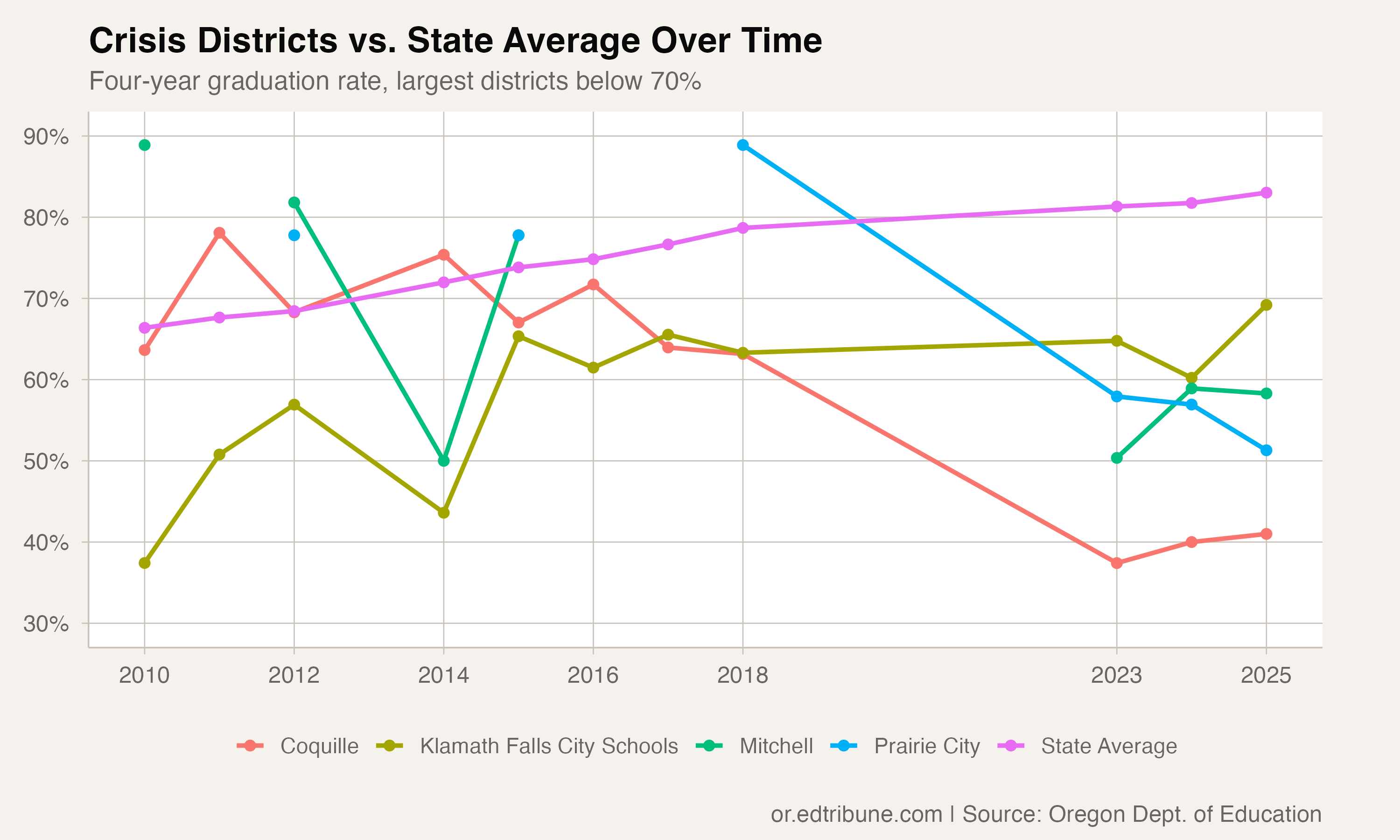
Even as Oregon hits a record 83% graduation rate, 15 districts graduate fewer than 70% of students. The list skews rural and coastal, with Coquille at 41%.
Data-Driven Education Journalism for the Beaver State
Page 2 of 4
Even as Oregon hits a record 83% graduation rate, 15 districts graduate fewer than 70% of students. The list skews rural and coastal, with Coquille at 41%.
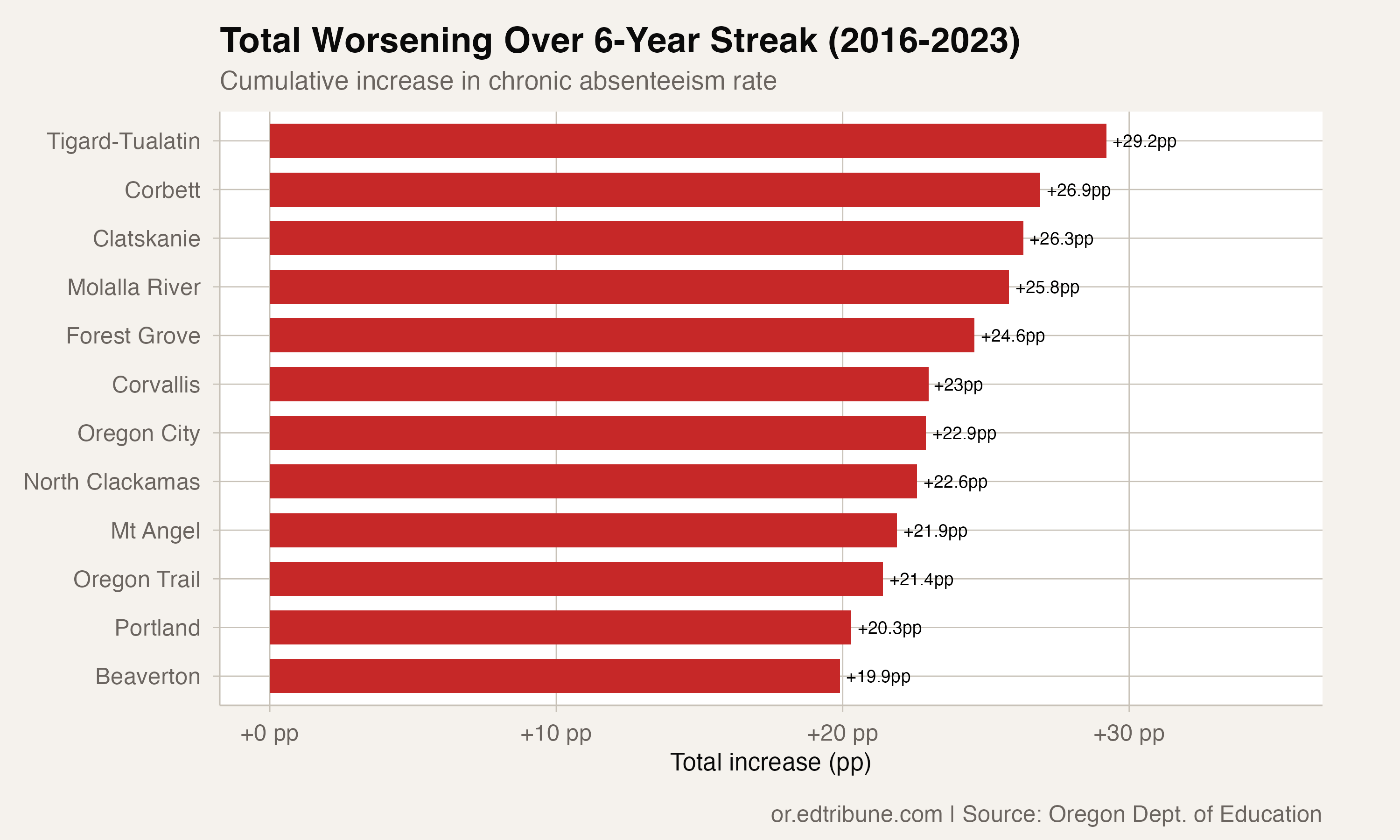
Beaverton, Portland, Tigard-Tualatin, and nine other districts saw chronic absenteeism worsen in every measurable year for six straight years, spanning pre-pandemic, pandemic, and post-pandemic eras.
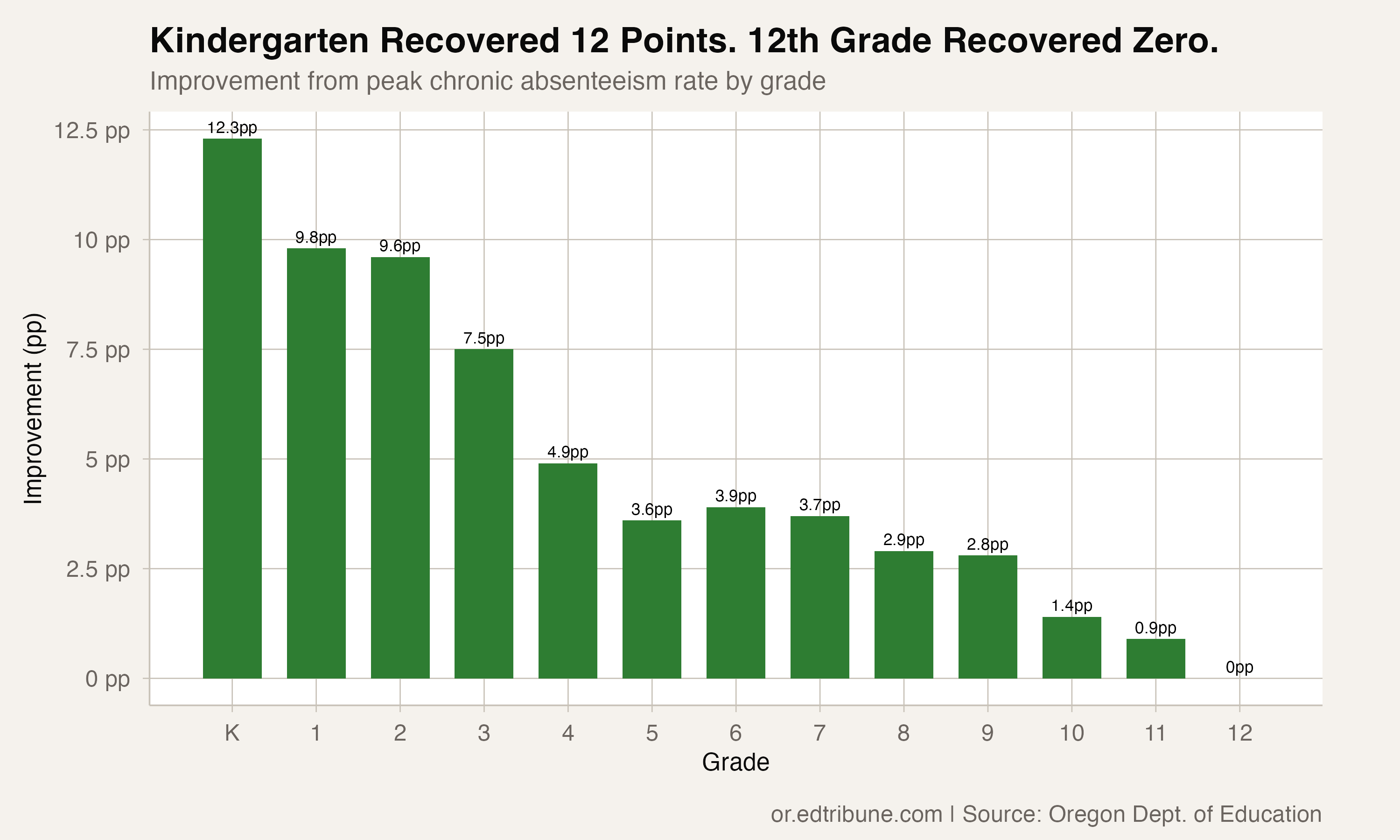
Oregon's 12th-grade chronic absenteeism rate was 52.5% in both 2022 and 2025. While kindergarten recovered 12 points, seniors have shown no improvement at all.
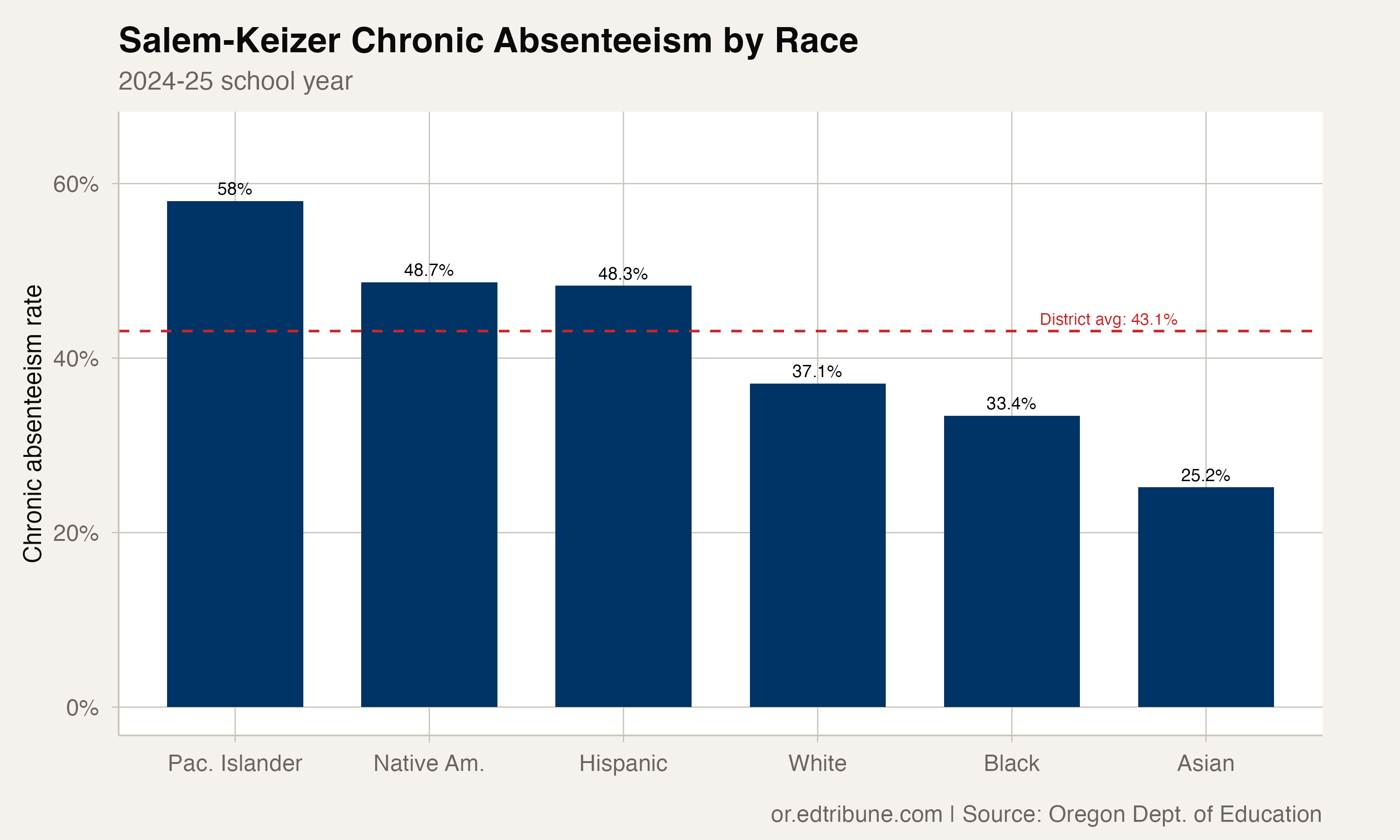
Oregon's third-largest district hit 43.1% chronic absenteeism in 2024-25, more than double its pre-COVID rate, with 48.3% of Hispanic students chronically absent.
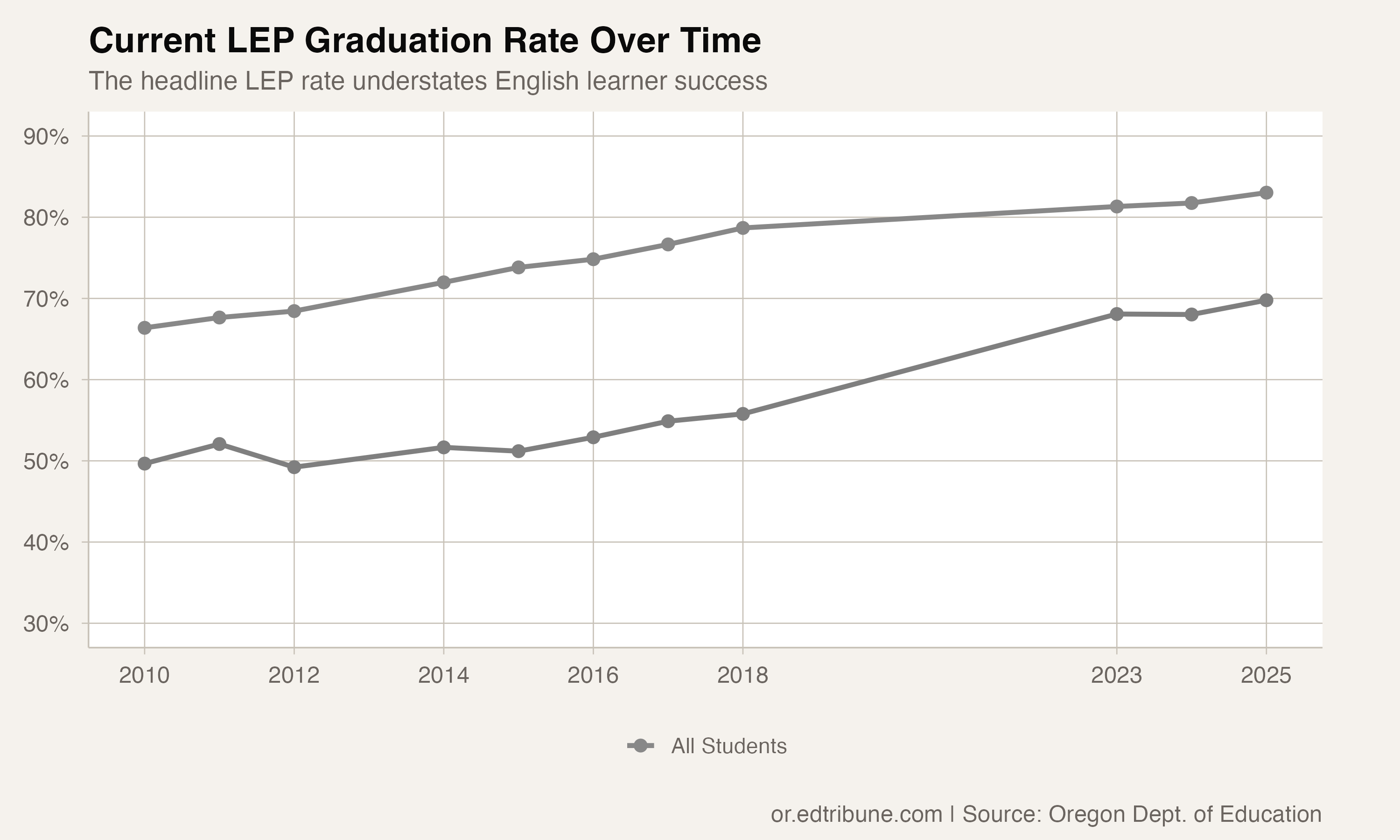
Oregon's LEP graduation rate of 70% masks a complex picture. Former English learners graduate at 89.5%, above average. The four-year clock is the barrier.
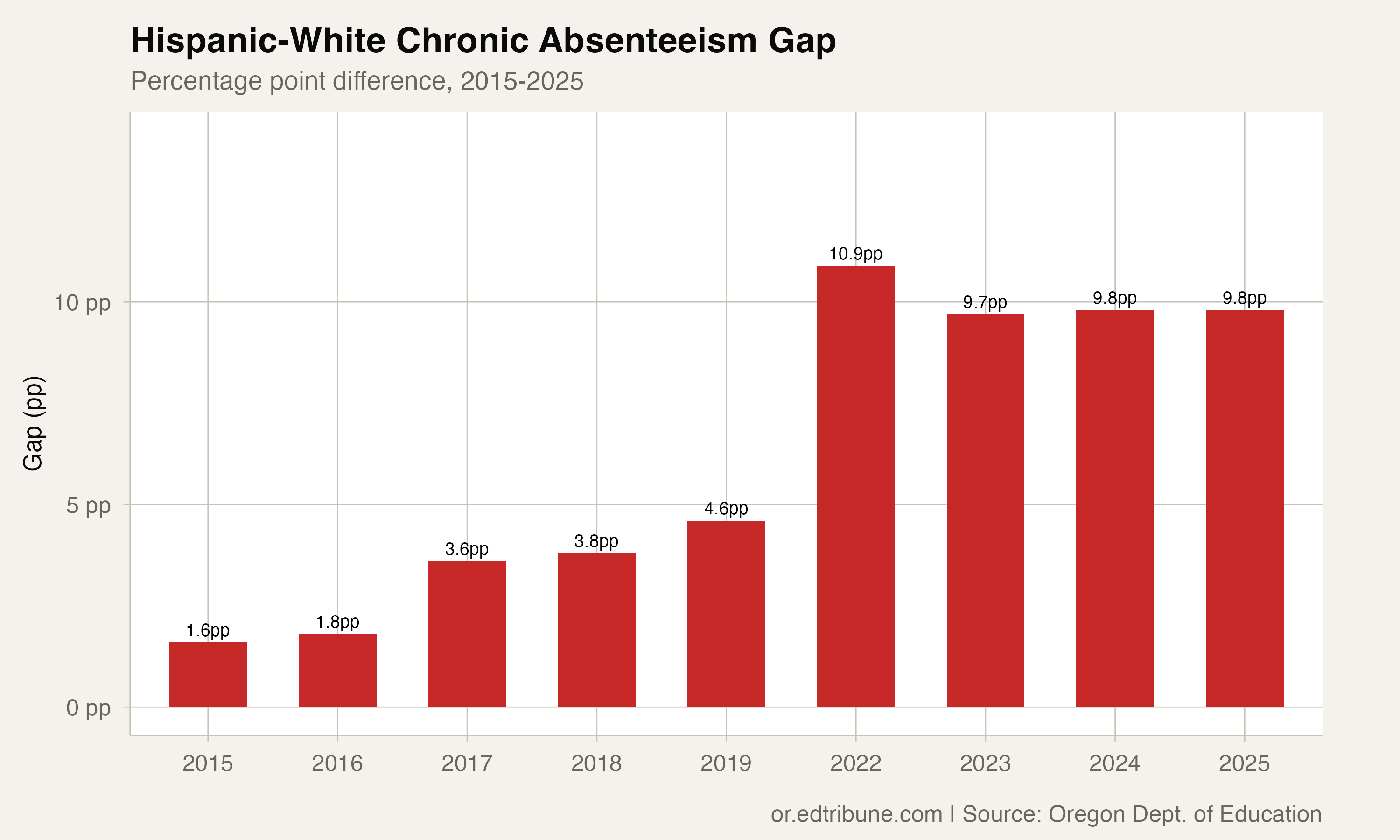
In 2015, Hispanic and white students had nearly identical absence rates. By 2025, the gap had grown roughly sixfold to 9.8 points (40.5% vs 30.7%).
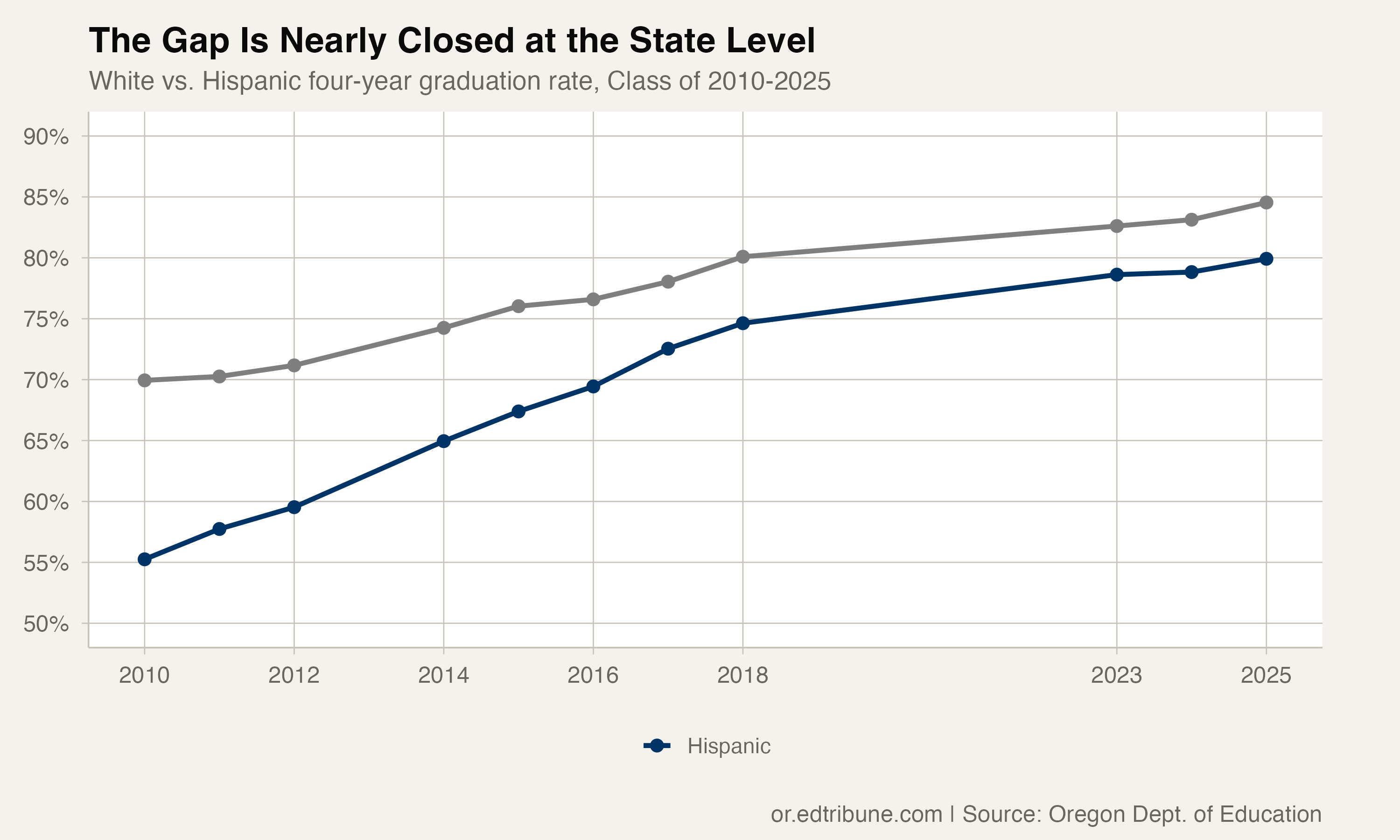
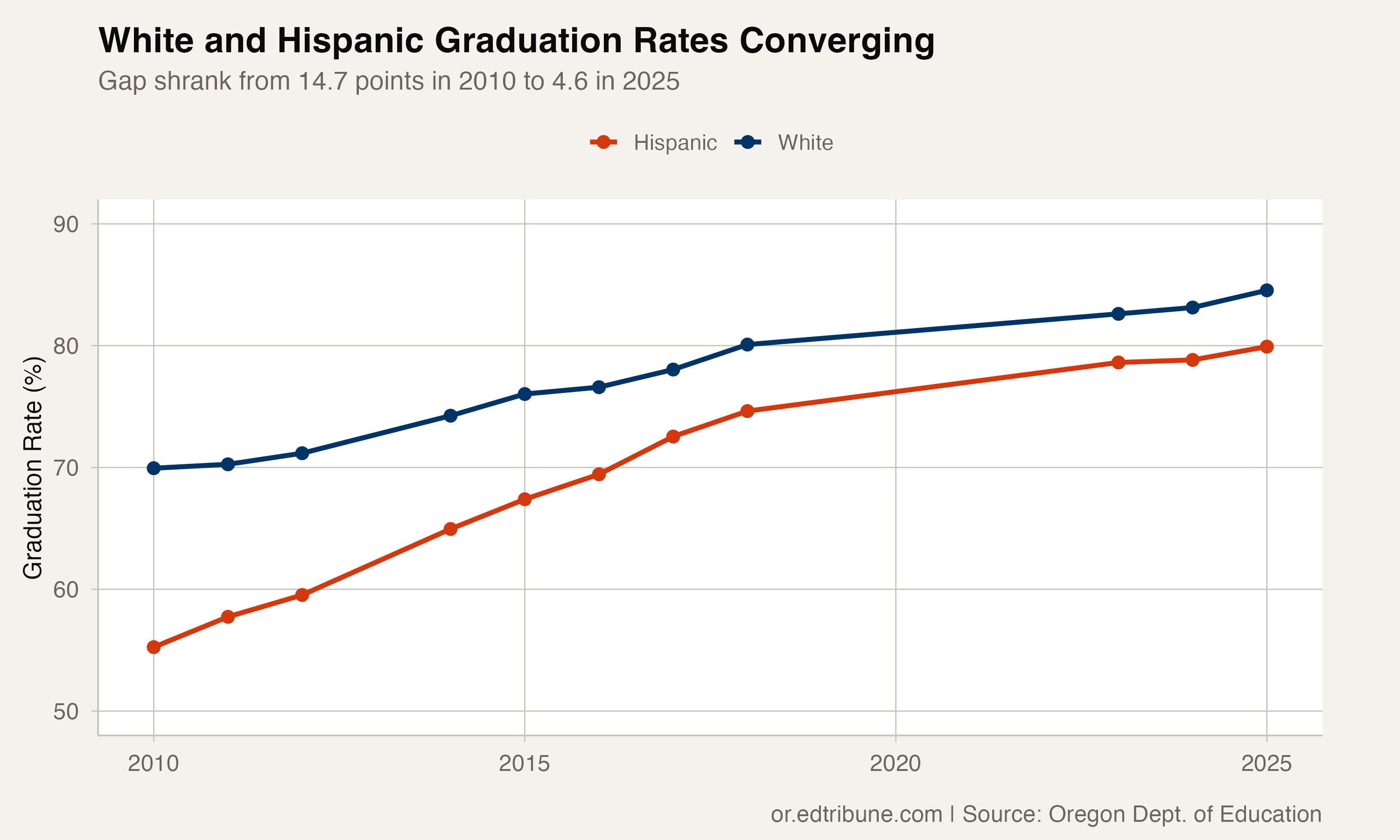
Oregon's white-Hispanic graduation gap narrowed from 14.7 to 4.6 points since 2010. Hispanic students gained 24.7 points; in 23 districts they now lead.
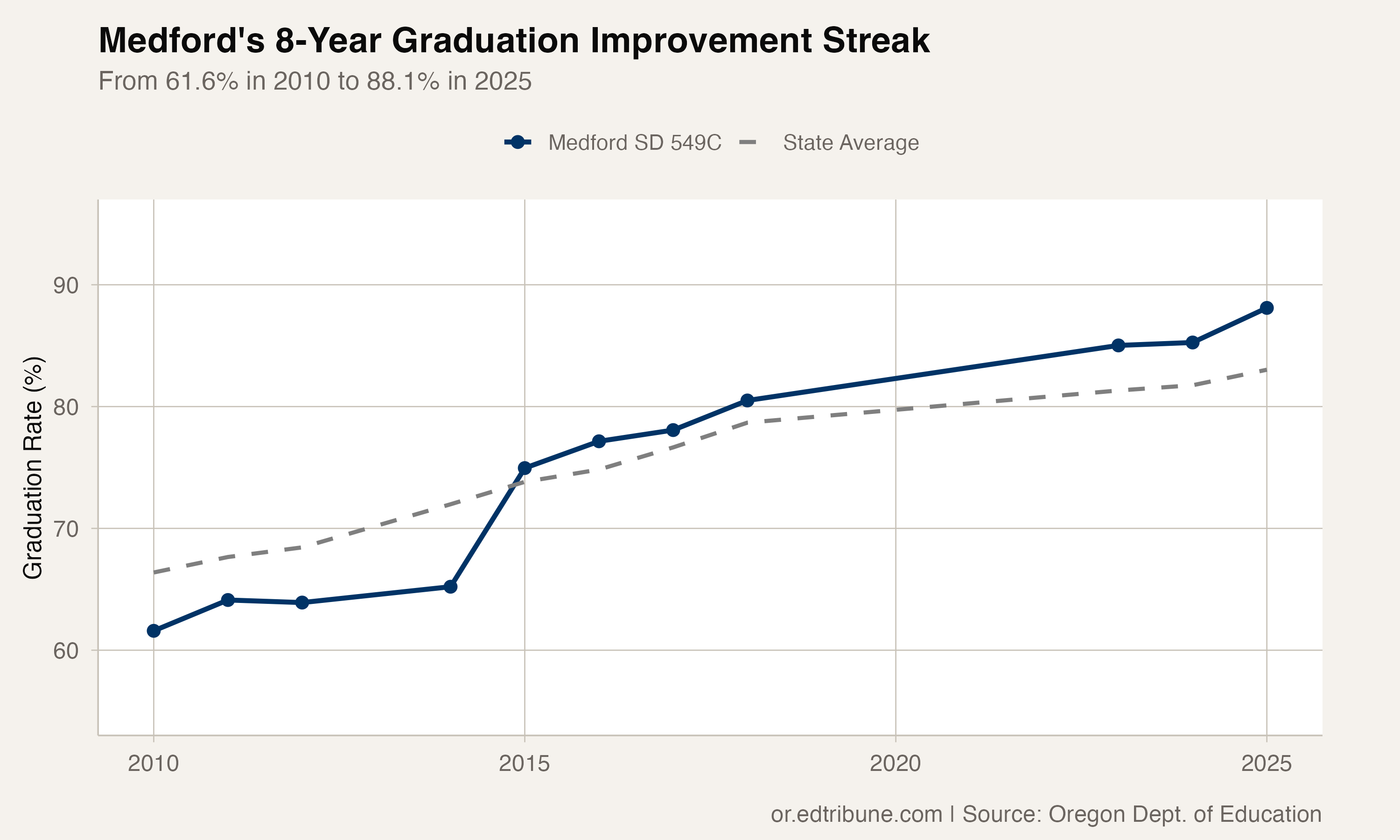
Medford SD 549C improved its graduation rate for 8 consecutive reporting years, climbing from 61.6% in 2010 to 88.1% in 2025.
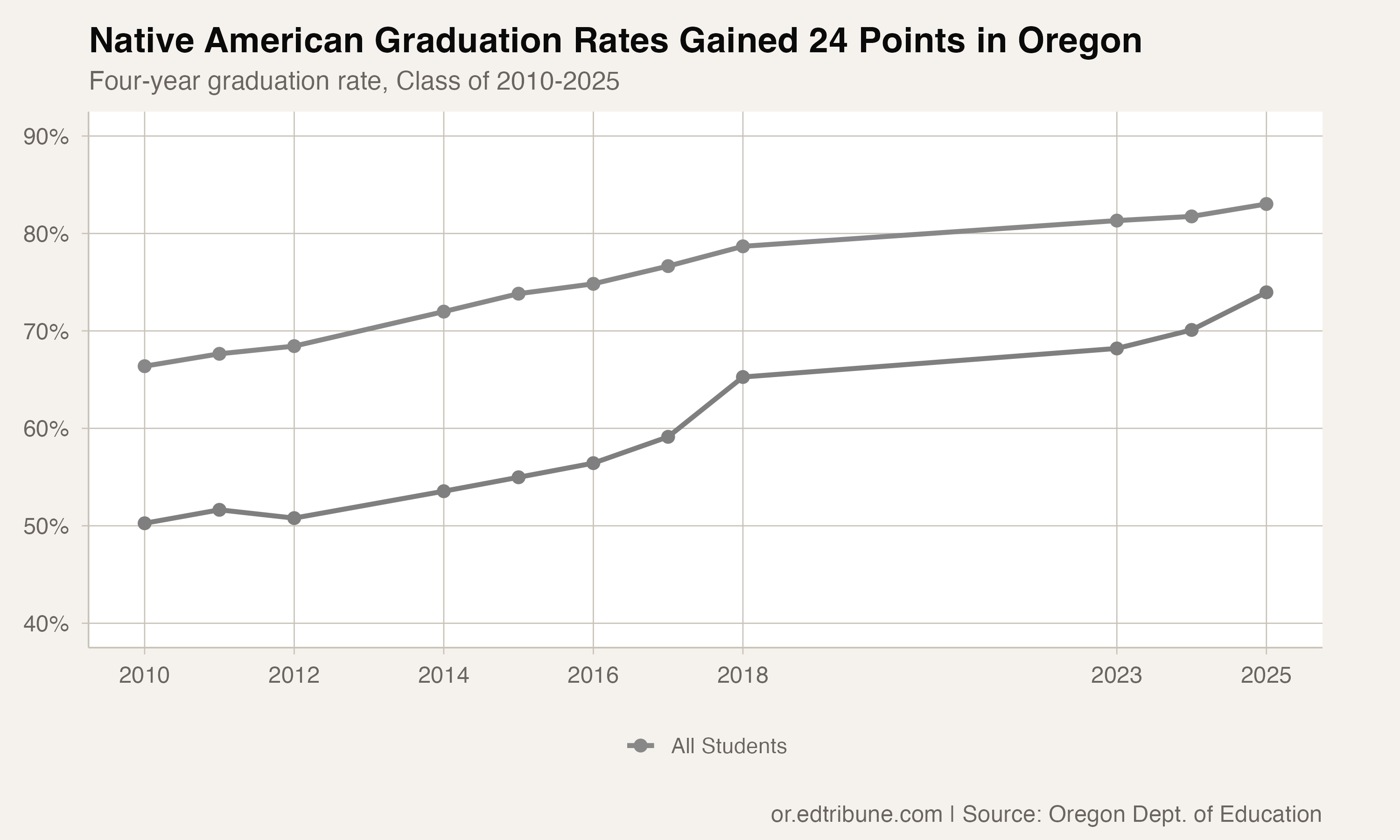
Oregon's Native American graduation rate improved from 50% to 74% since 2010. Jefferson County graduates at 87%, Portland at 48%.
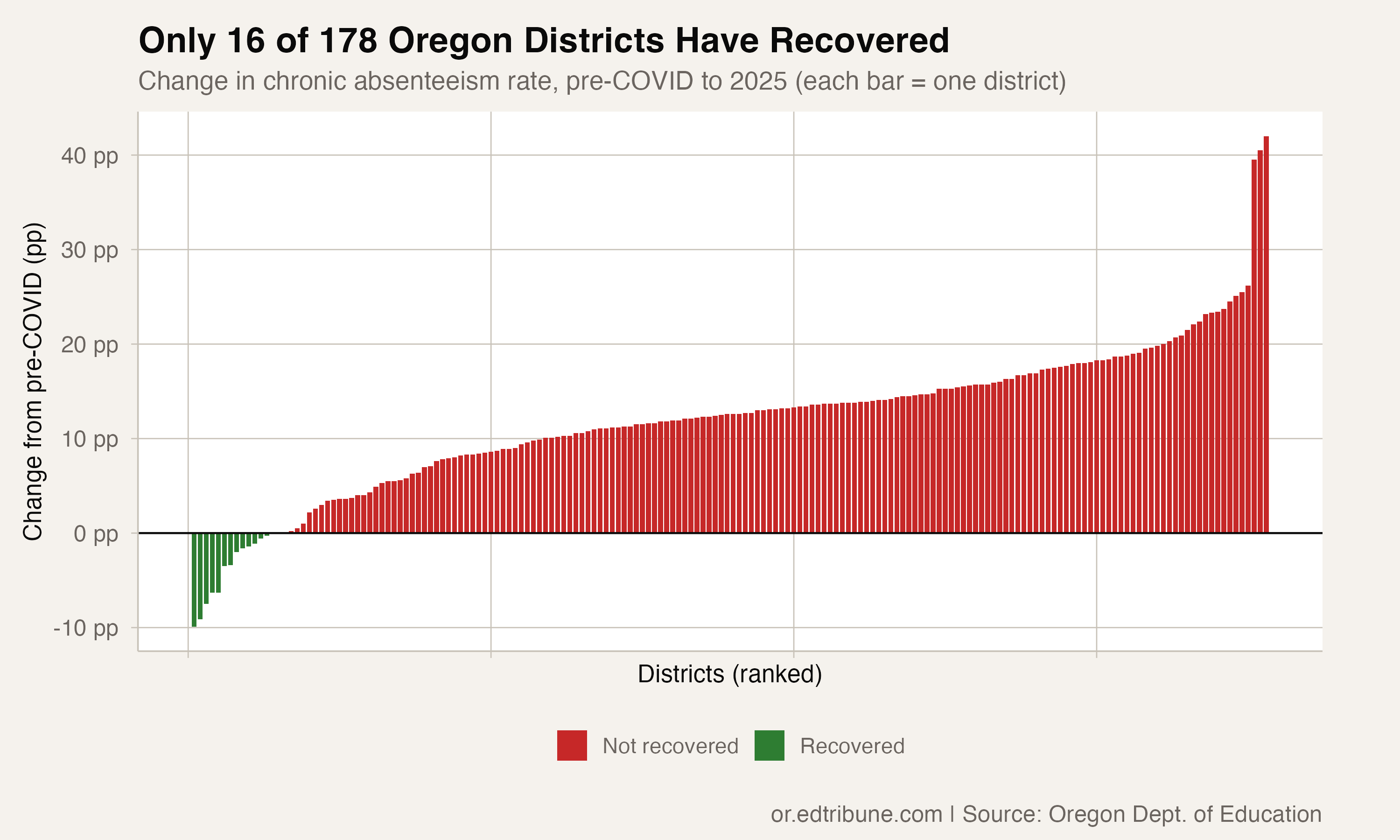
14 of 180 Oregon school districts have returned to pre-pandemic chronic absenteeism levels on the school rows the state publishes. None of the state's ten largest districts are among them.
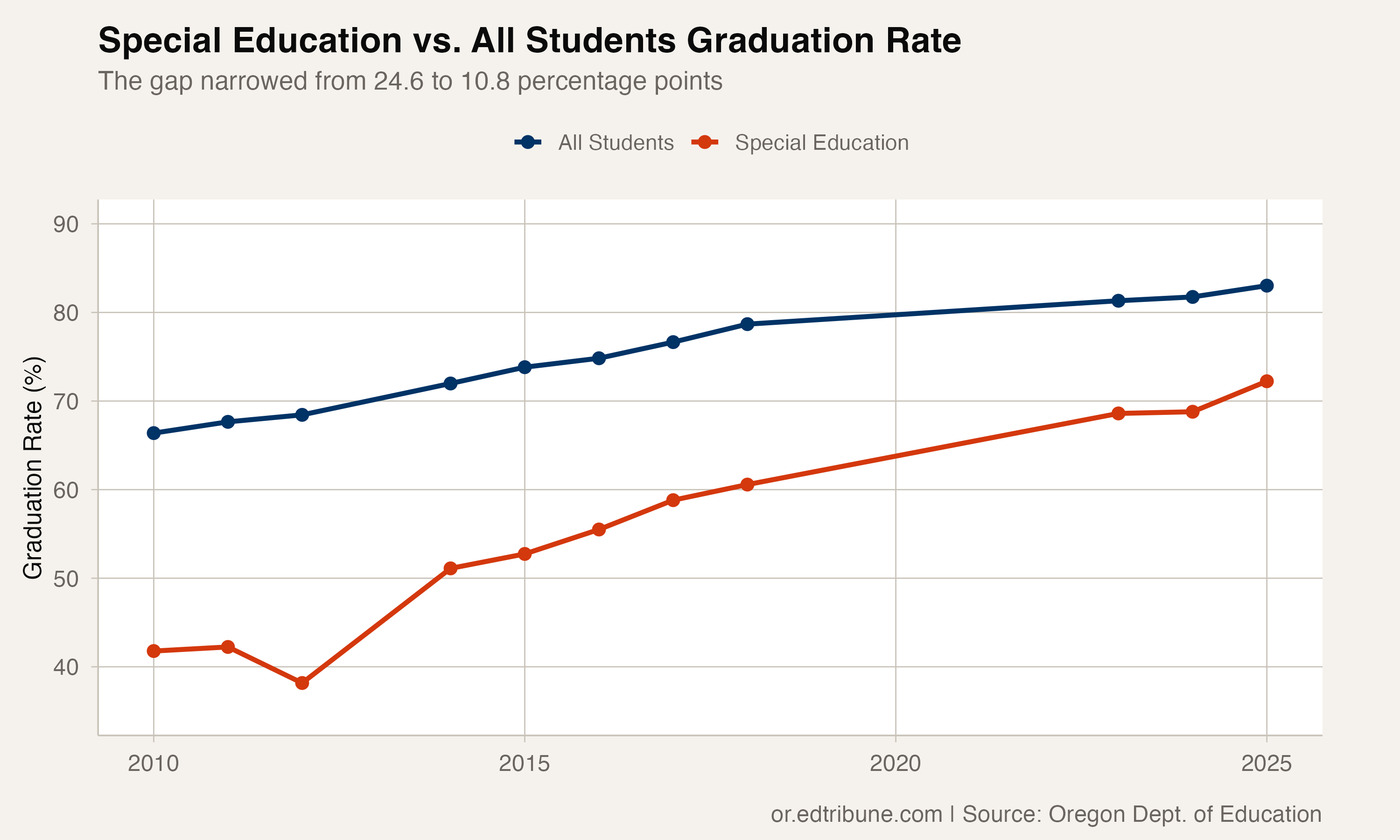
Oregon's graduation rate for students with disabilities climbed from 41.8% to 72.2% over 15 years, the largest subgroup gain. But did standards also change?
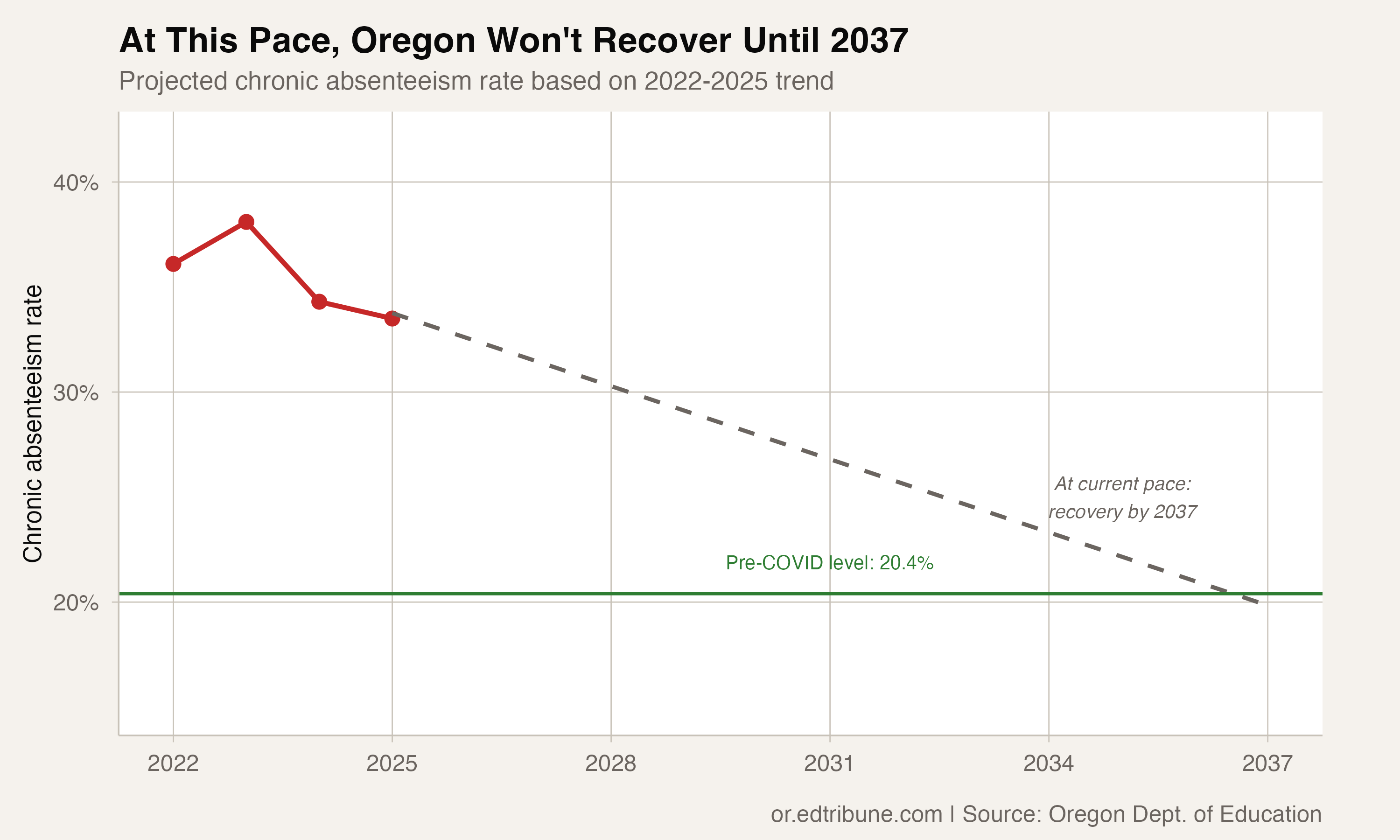
Oregon's chronic absenteeism rate stands at 33.5%, with 174,000 students missing 10% or more of the school year. At the current pace, recovery to pre-pandemic levels won't come until 2037.
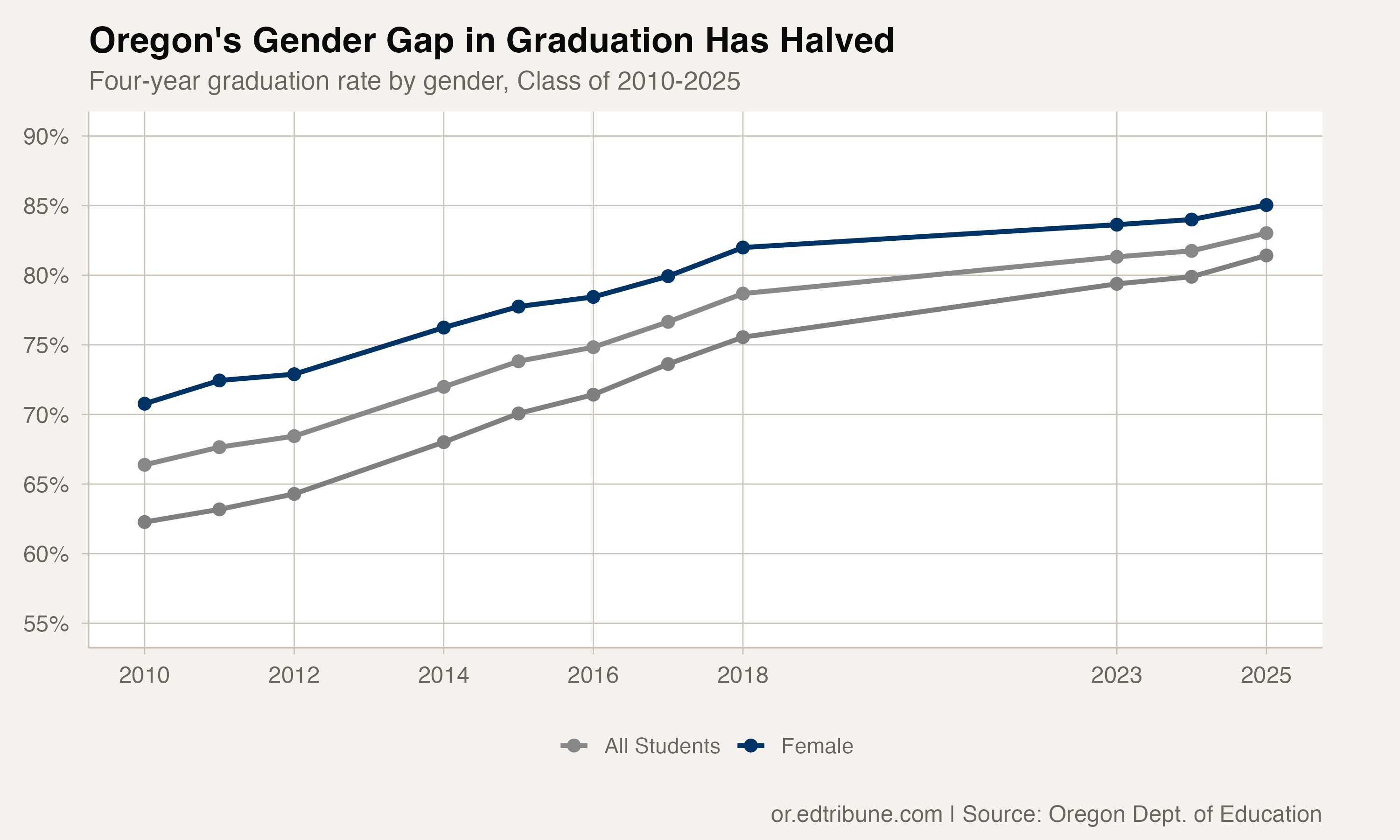
Oregon's female-male graduation gap narrowed from 8.5 to 3.6 points since 2010, driven by male gains. Oregon also reports non-binary graduation data.
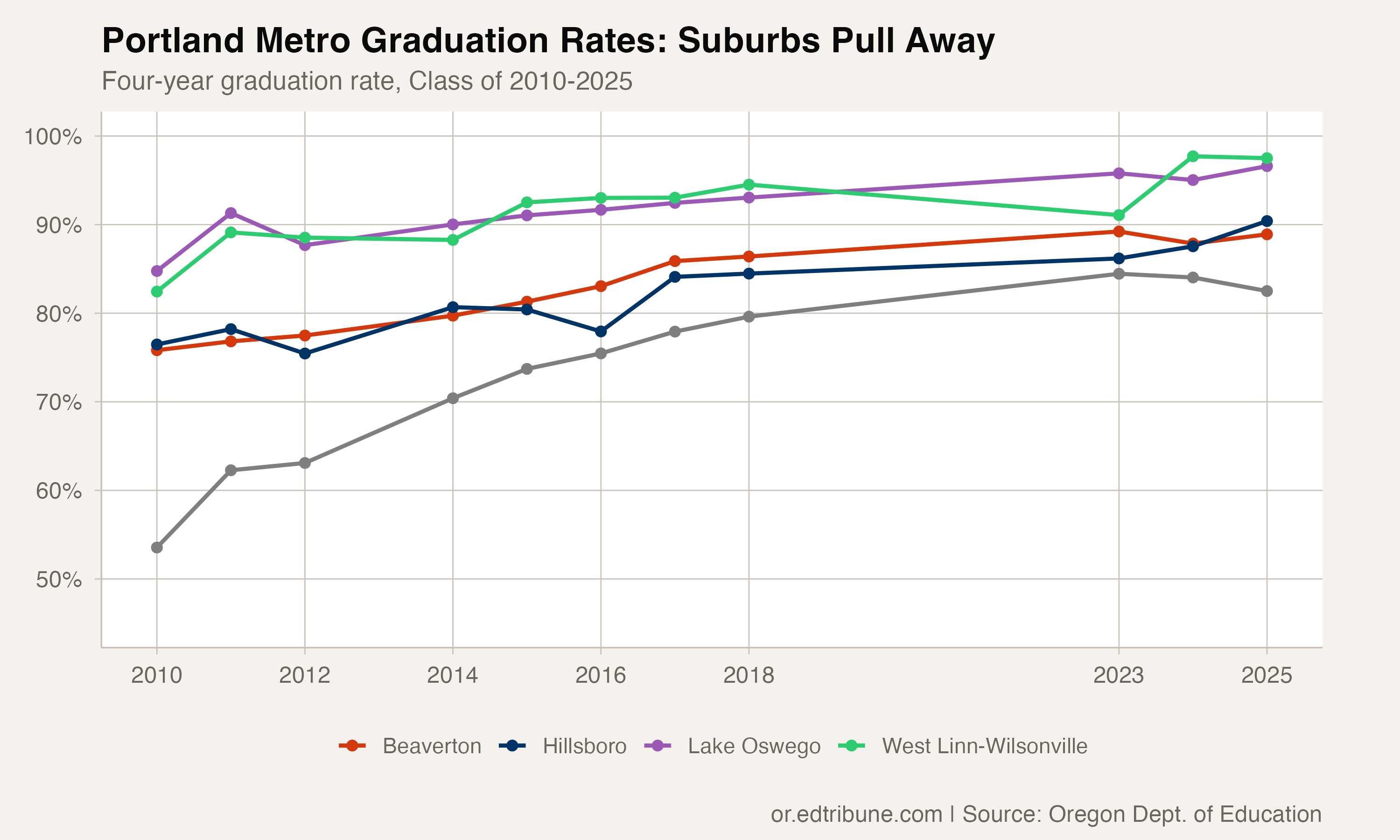
Hillsboro SD crossed 90% graduation for the first time with 1,651 students, while Portland suburbs graduate 8 to 15 points above the city.
In 23 Oregon districts, Hispanic students graduate at higher rates than white students. The gaps are largest in agricultural communities.