Equity
Four Vulnerable Oregon Student Groups Trailed the State Graduation Rate
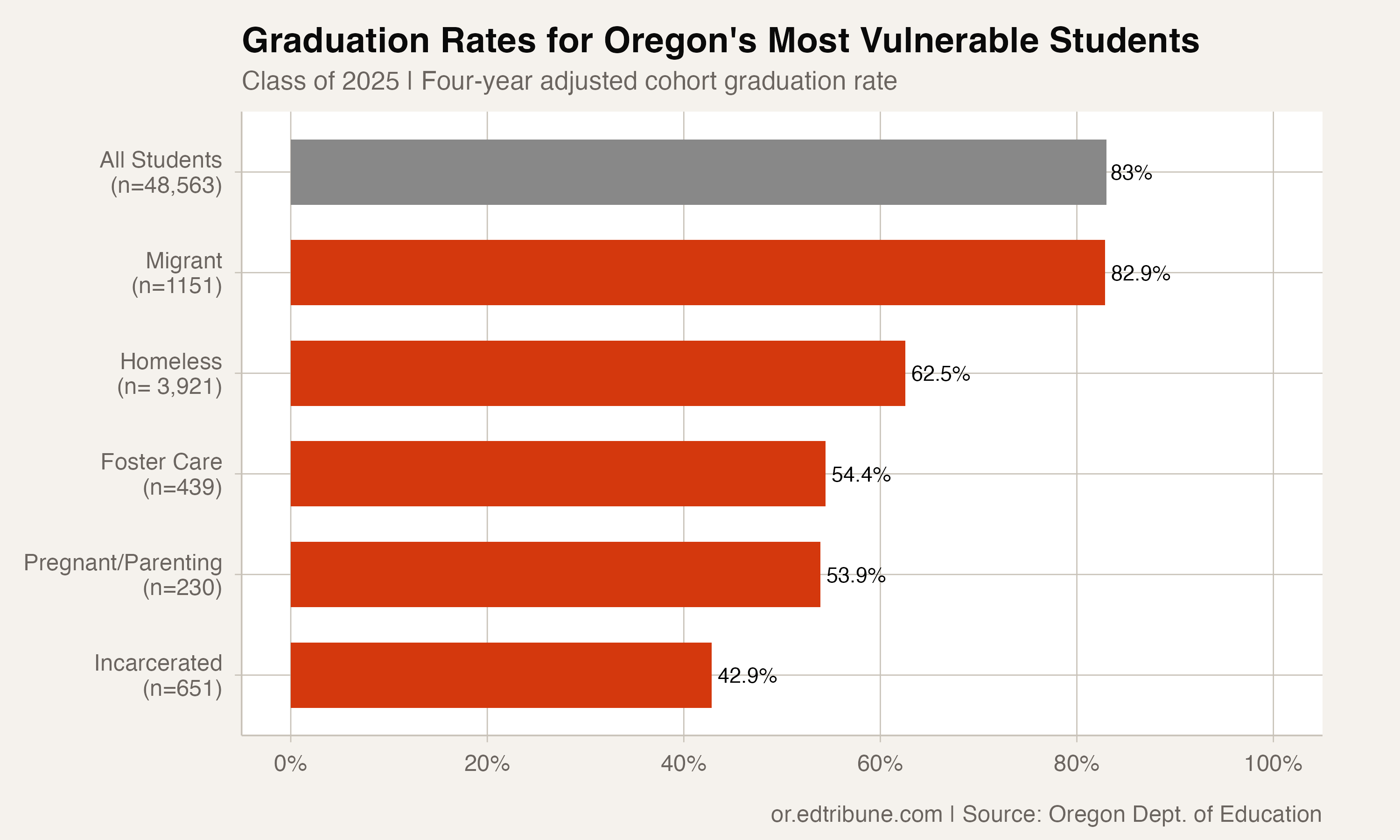
In 2025, graduation rates for incarcerated, pregnant or parenting, foster-care, and homeless students ranged from 42.9% to 62.5%, below Oregon's 83.0% statewide rate.
Data-Driven Education Journalism for the Beaver State
Education News & Data
Local education reporting from every corner of Oregon, grounded in Oregon Department of Education data.
Lake Oswego reported 18.1% chronic absenteeism in 2024–25, below Oregon’s 33.5% rate and lowest among districts with at least 5,000 attendance-enrolled students.
Chronic absenteeism fell three years running across Nyssa's three in-person schools, and the superintendent describes the work behind it. The district-wide rate is not comparable.
Portland SD 1J dropped 4.4 points to 32.5% chronic absenteeism, the largest 2025 gain among Oregon districts with more than 10,000 students, and returned below the state average.
Oregon's attendance crisis is not concentrated in a few struggling districts. 154 of 184 districts reported rates at or above 25% in 2024-25, and 156 did when each district is measured on the schools whose attendance the state publishes.
In 2025, graduation rates for incarcerated, pregnant or parenting, foster-care, and homeless students ranged from 42.9% to 62.5%, below Oregon's 83.0% statewide rate.
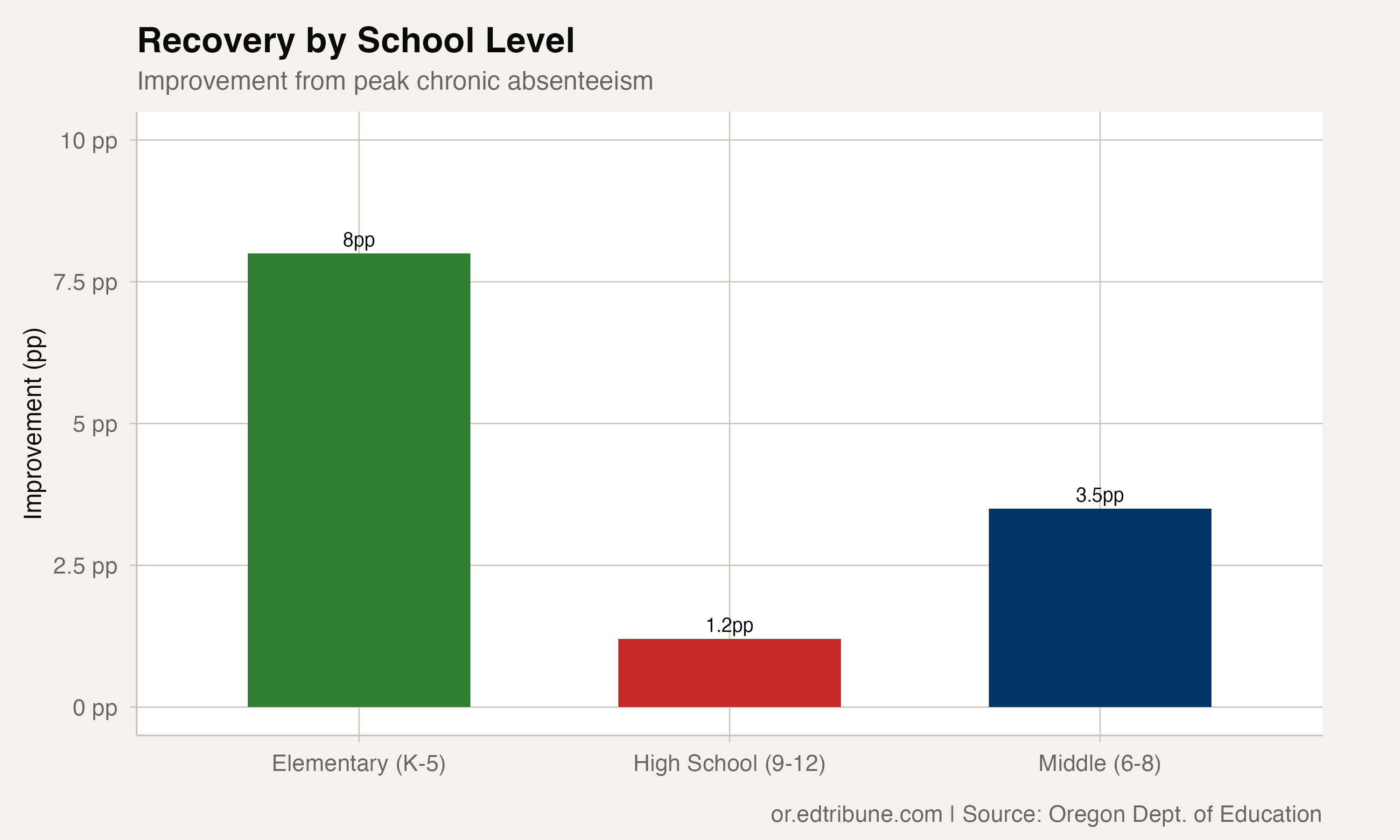
Elementary chronic absenteeism dropped 8 points from peak. High school dropped 1.2 points. Oregon's attendance recovery is happening in grades K-5, not 9-12.
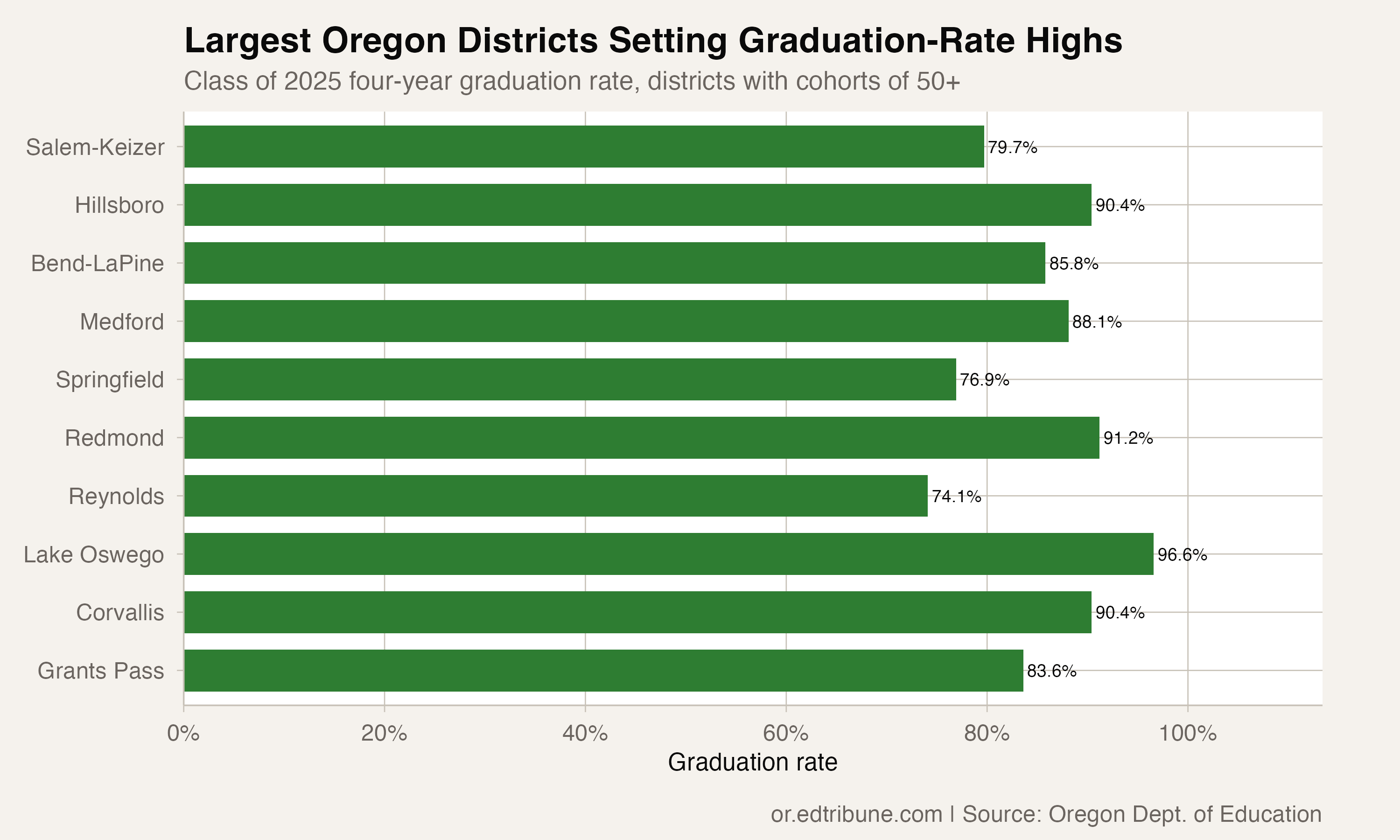
Thirty-seven Oregon districts with Class of 2025 cohorts of 50 or more set all-time high graduation rates, including four of the state's 10 largest districts.
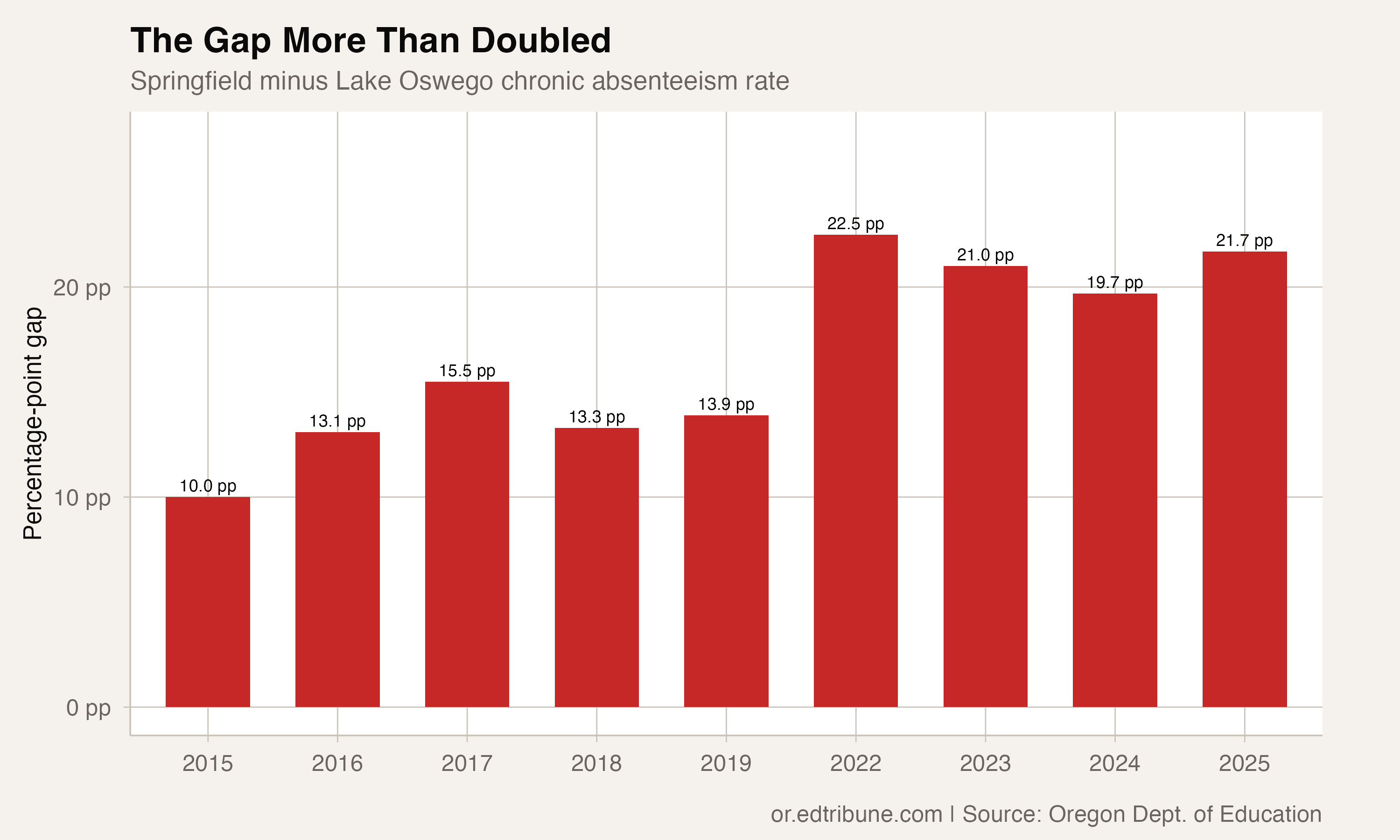
Lake Oswego reported 18.1% chronic absenteeism in 2024-25 and Springfield reported 39.8%. The gap was present in every available year and has more than doubled since 2014-15.
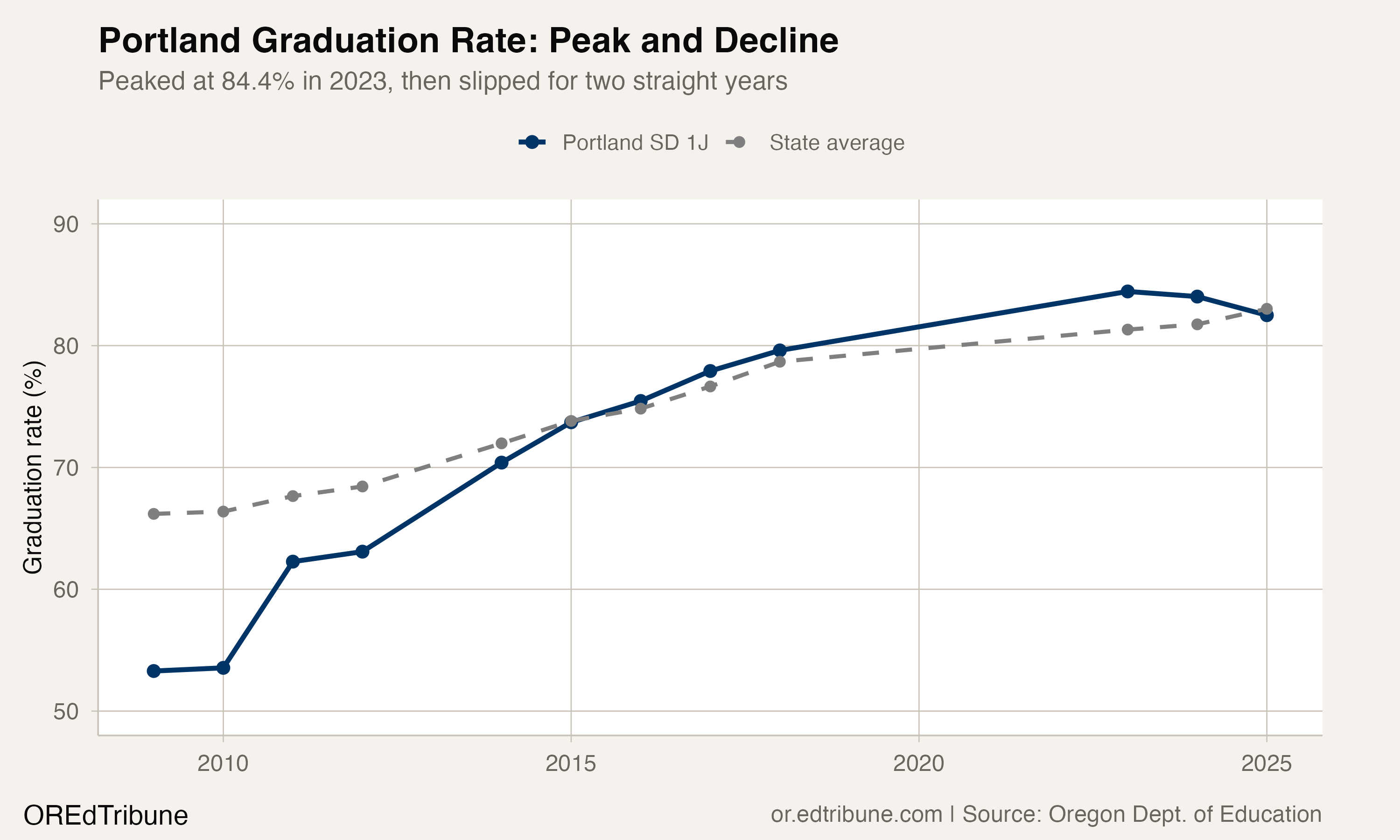
Portland SD 1J's graduation rate peaked at 84.4% in 2023 after climbing from 53.6% in 2010, then slipped to 82.5% in 2025.
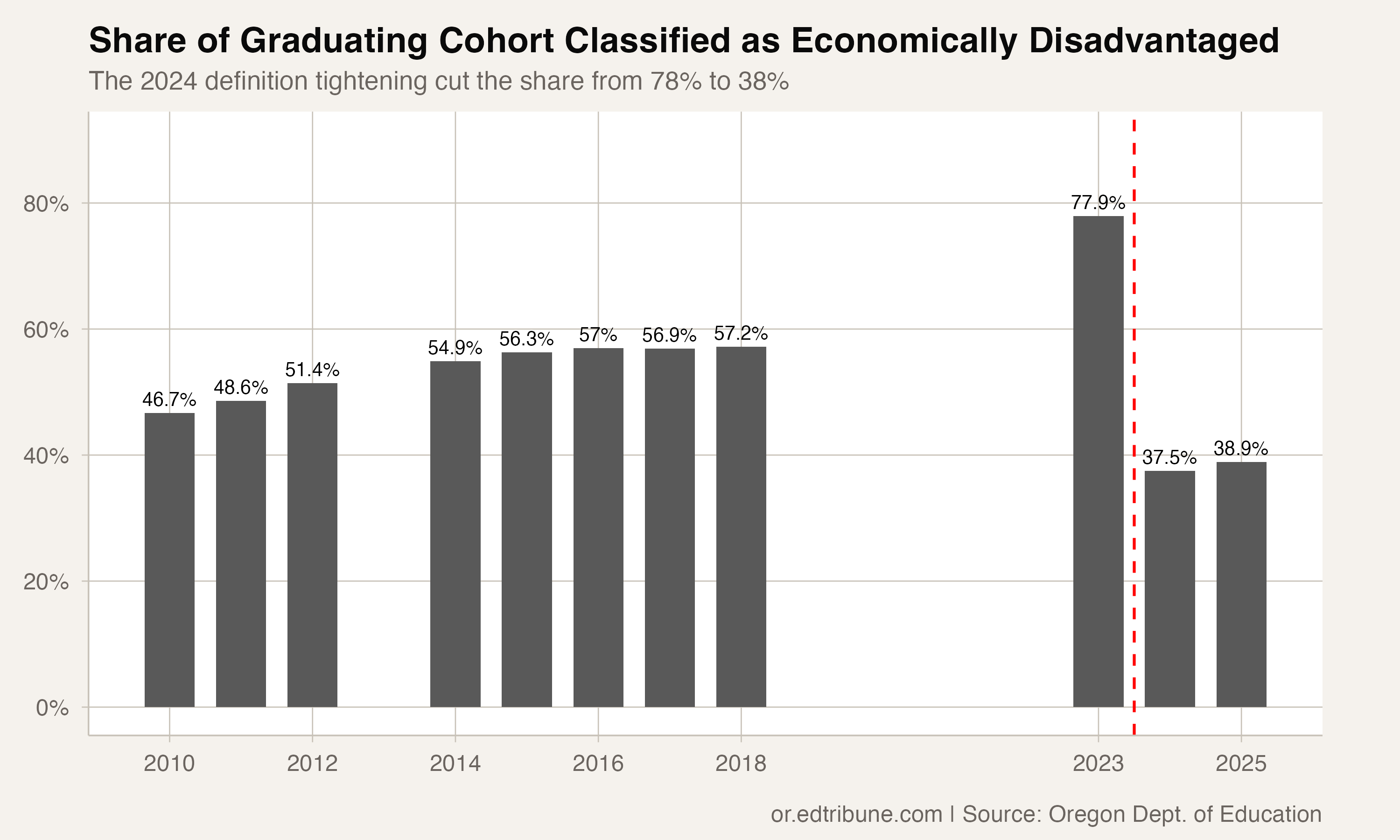
Oregon's poverty graduation gap appeared to vanish because 78% of the cohort was classified as disadvantaged. A tighter definition revealed a 12-point gap.
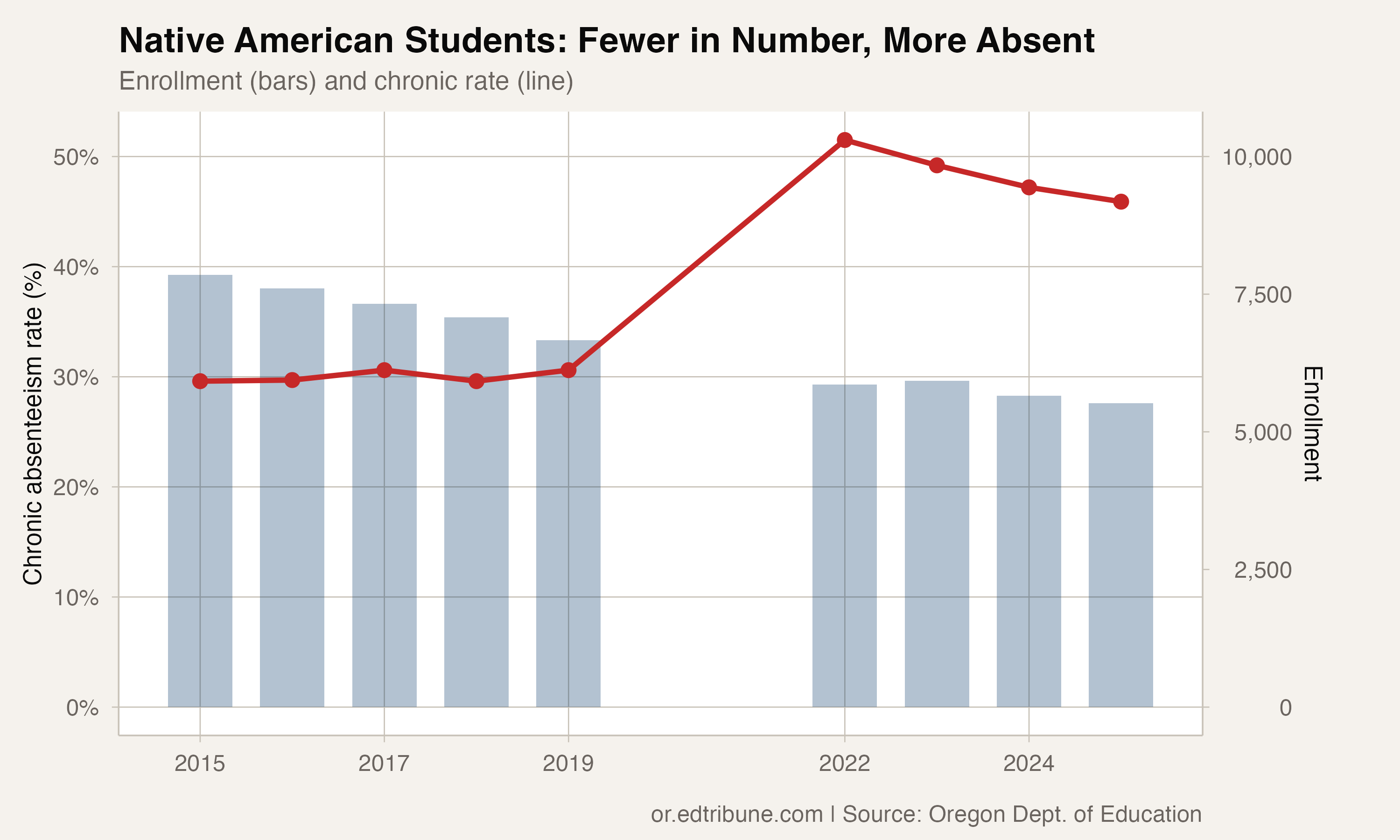
Oregon's Native American state row reported 5,516 students and a 45.9% chronic absenteeism rate in 2024-25, down from a 51.5% panel peak.
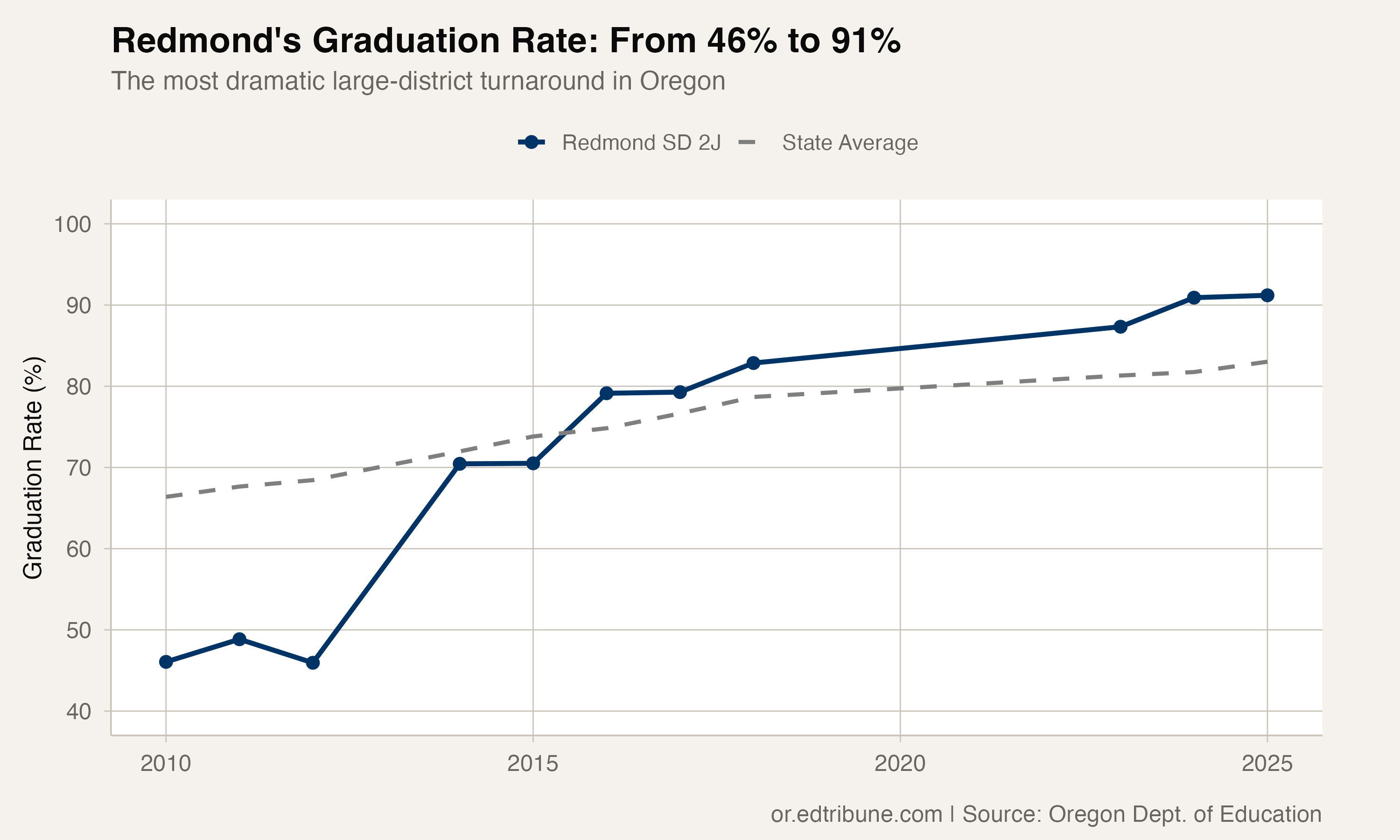
Redmond SD 2J's reported four-year graduation rate rose from 46.1% in 2010 to 91.2% in 2025 across 11 Oregon package observations.
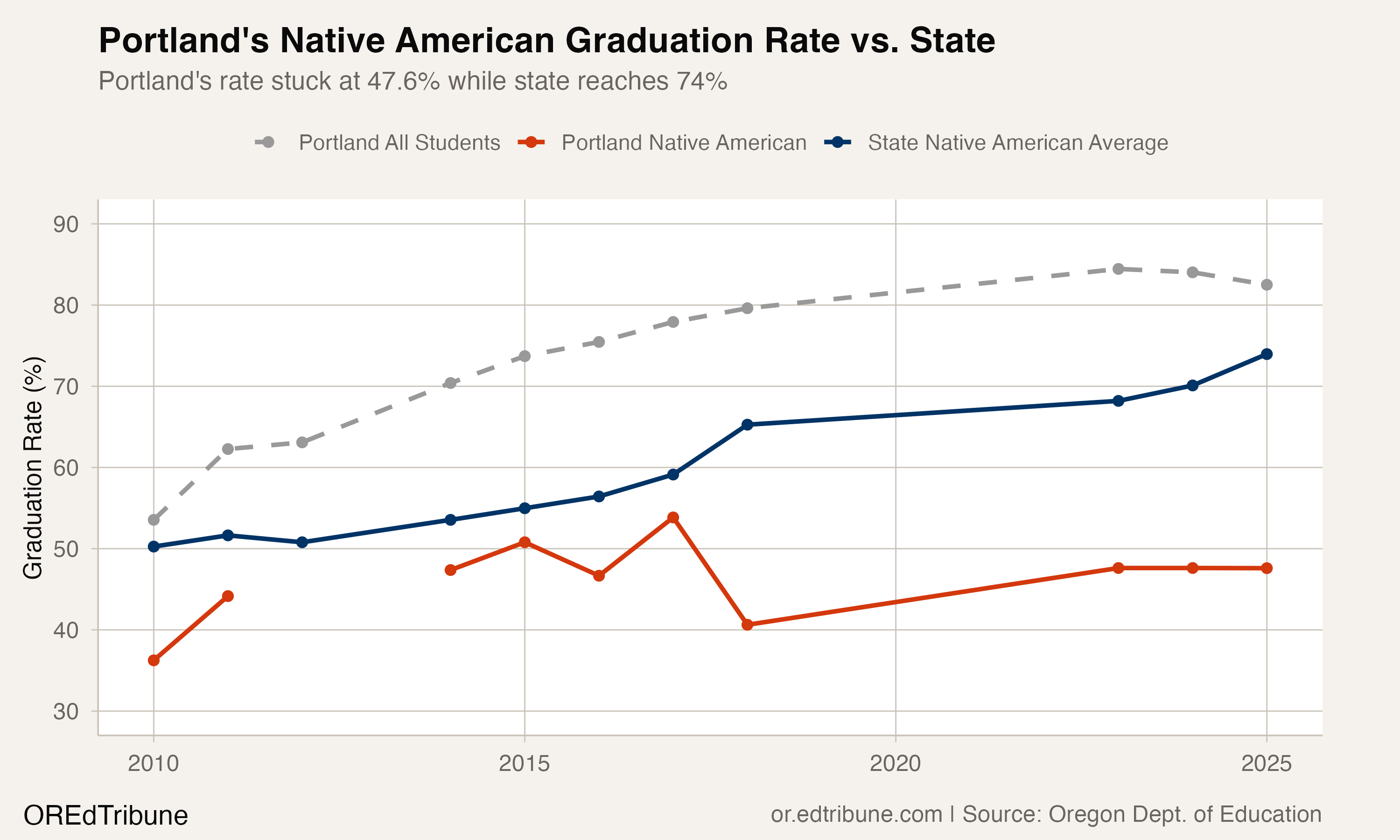
Portland's Native American graduation rate is stuck at 47.6% for three straight years, 26 points below statewide and 35 below the district average.
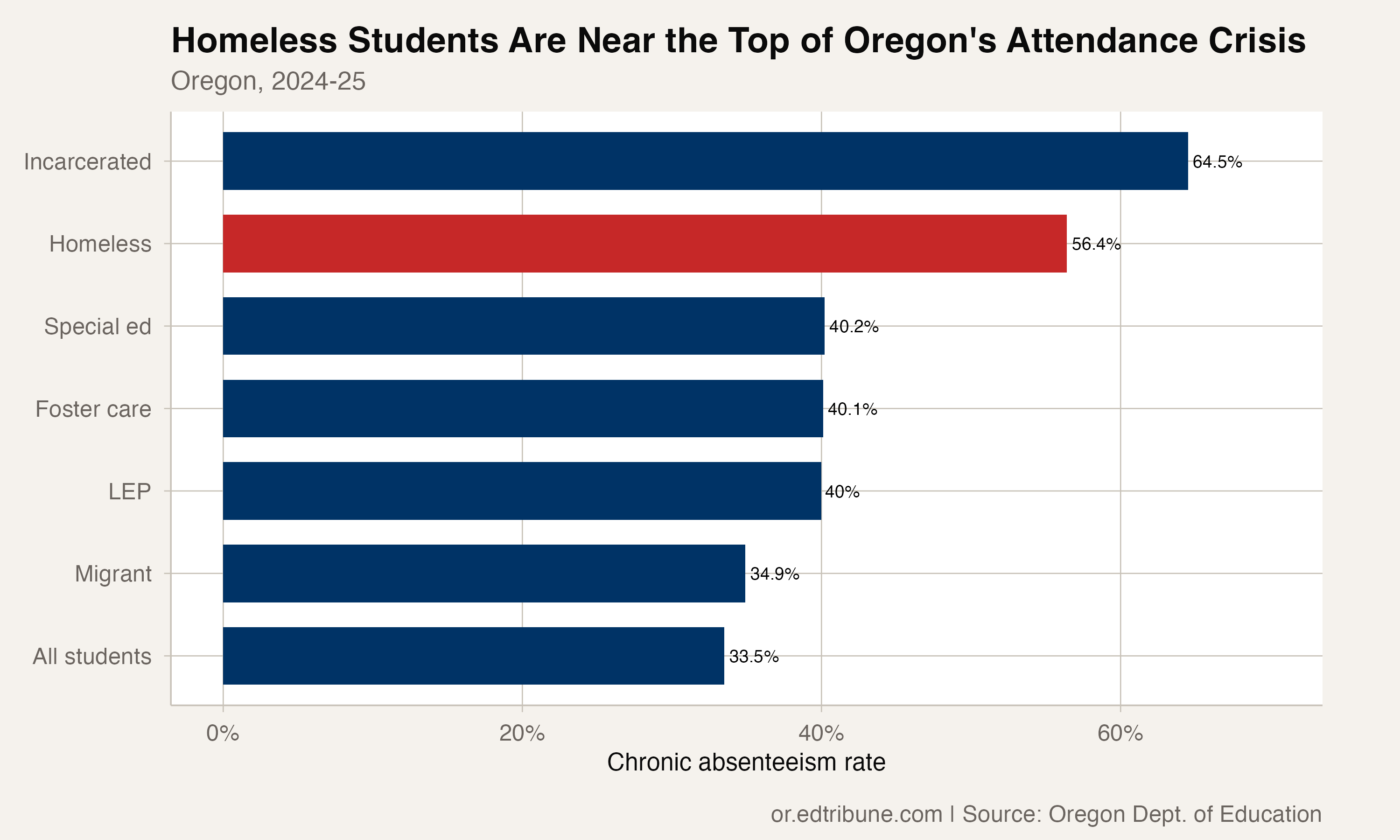
Oregon's 15,920 students who are currently homeless have a chronic absenteeism rate of 56.4% — more than half miss too much school. The gap with the overall rate has held near 22 to 25 points every year since 2018.
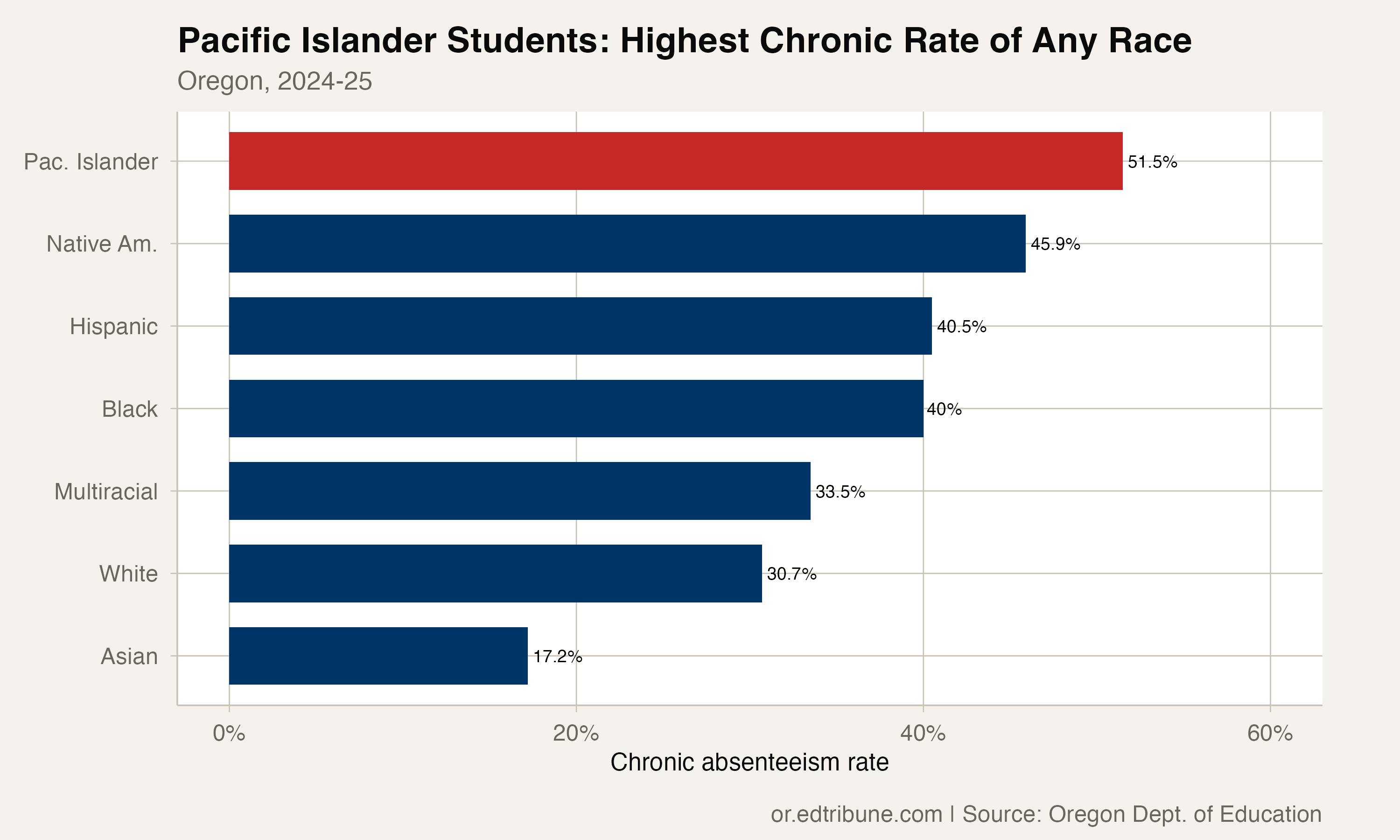
Pacific Islander students have the highest chronic absenteeism of any racial group in Oregon at 51.5%. The gap with white students has quadrupled from 5.0 to 20.8 points.